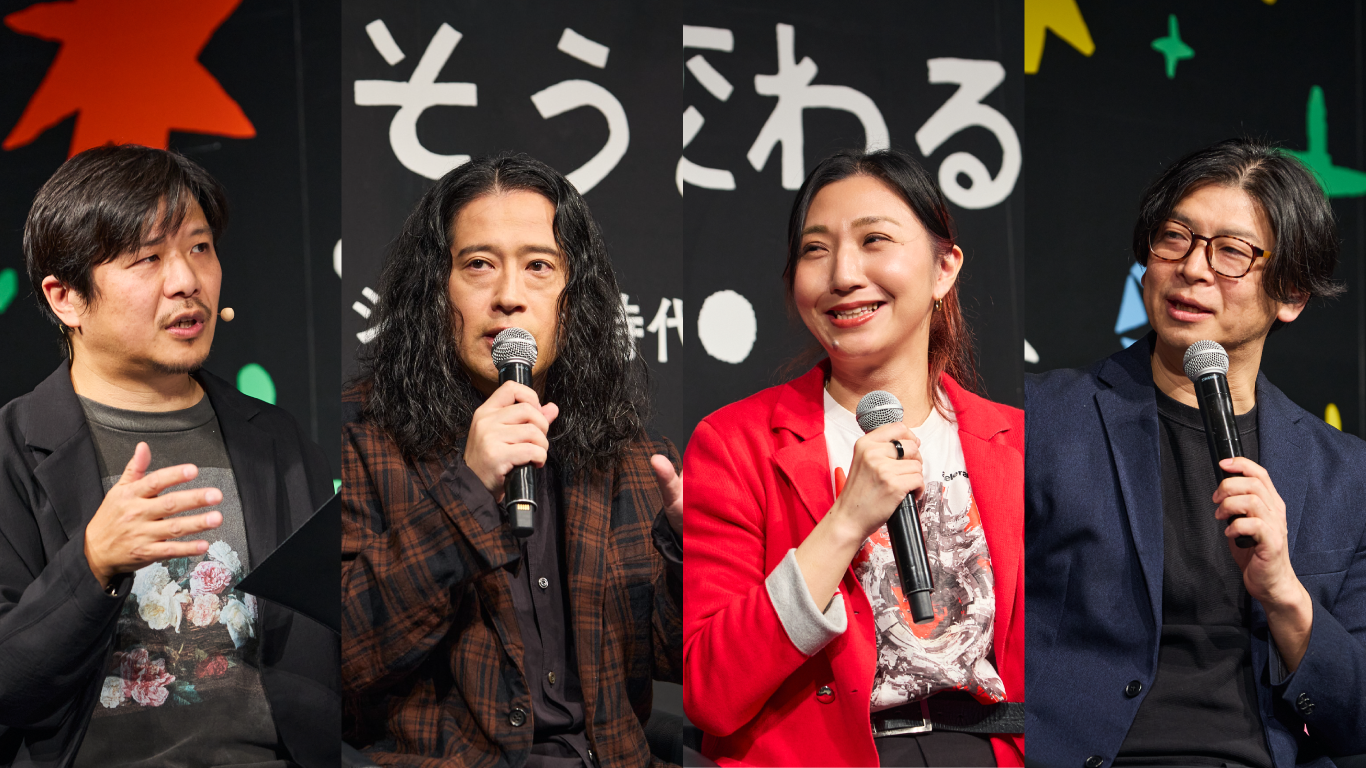
The purpose of AI is not to search for right answers but to deepen our thoughts through dialogue and come across unimagined ideas. AI is poised to change the way we work and create; brand-new value lies in prompt exploring, rather than prompt engineering.
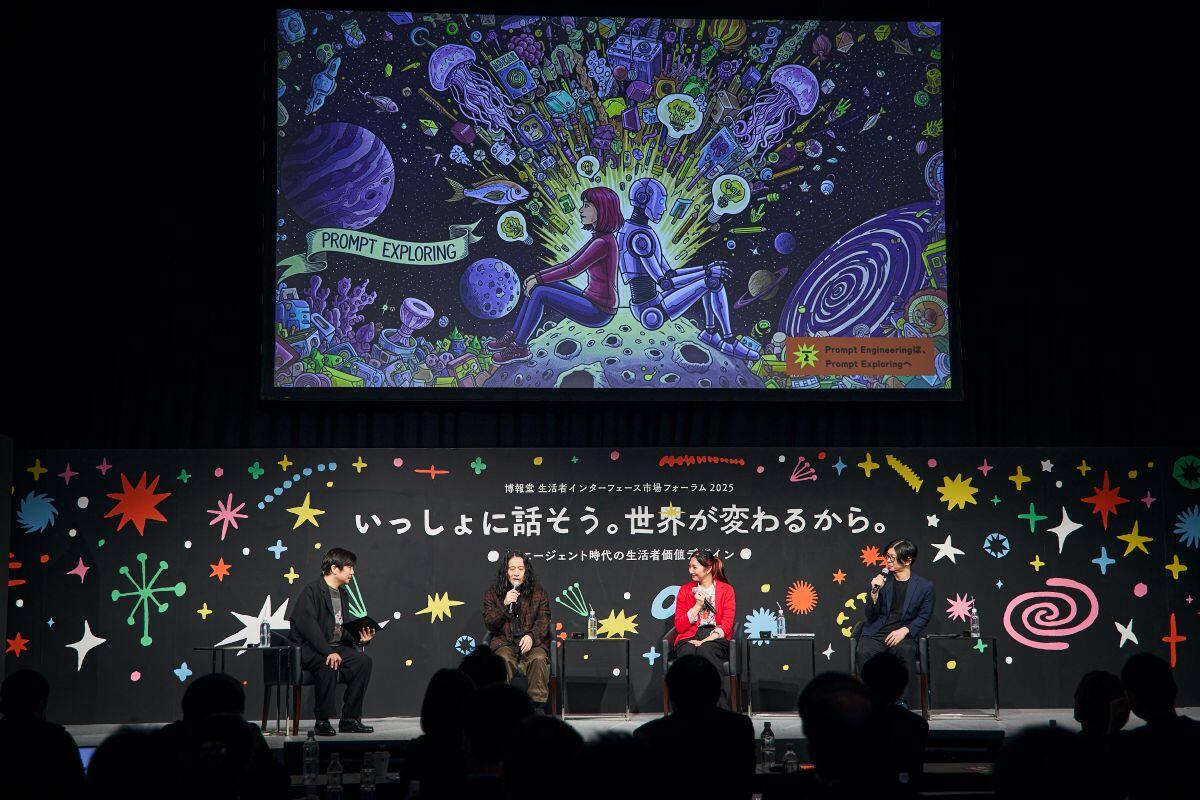
This article is a summary of the session entitled "From Prompt Engineering to Prompt Exploring: Dialogue with AI Has the Key to Transcending Imagination" at Sei-katsu-sha* Interface Market Forum 2025, held recently on the theme of: "Let's Sit Down and Talk to Reimagine the World: Sei-katsu-sha Value Design in the AI Agent Era."
Naoki Matayoshi
Comedian
Chie Kamijo
COO, OpenFashion Inc. / AuthenticAI Inc. & AI Initiative Manager, Corporate Strategy Division, World Co., Ltd.
Ryuji Noguchi
Representative Director, AIX partner Inc.
Satoshi Chikayama
Executive Creative Director, PROJECT_Vega, Hakuhodo Inc.
Warming up for work with AI
CHIKAYAMA
The world of AI is changing fast as it rapidly penetrates society as attested by the fact that "Chappy," a nickname for ChatGPT, was nominated for Japan's Buzzword of the Year 2025.
As we now live the era of AI agents, it has become common for people to instruct AI, and AI to execute the instructions. With the advent of AI as an interlocutor, everyone can exercise a high degree of dialogue skills, effectively ushering in the phase of "democratization of dialogue skills."
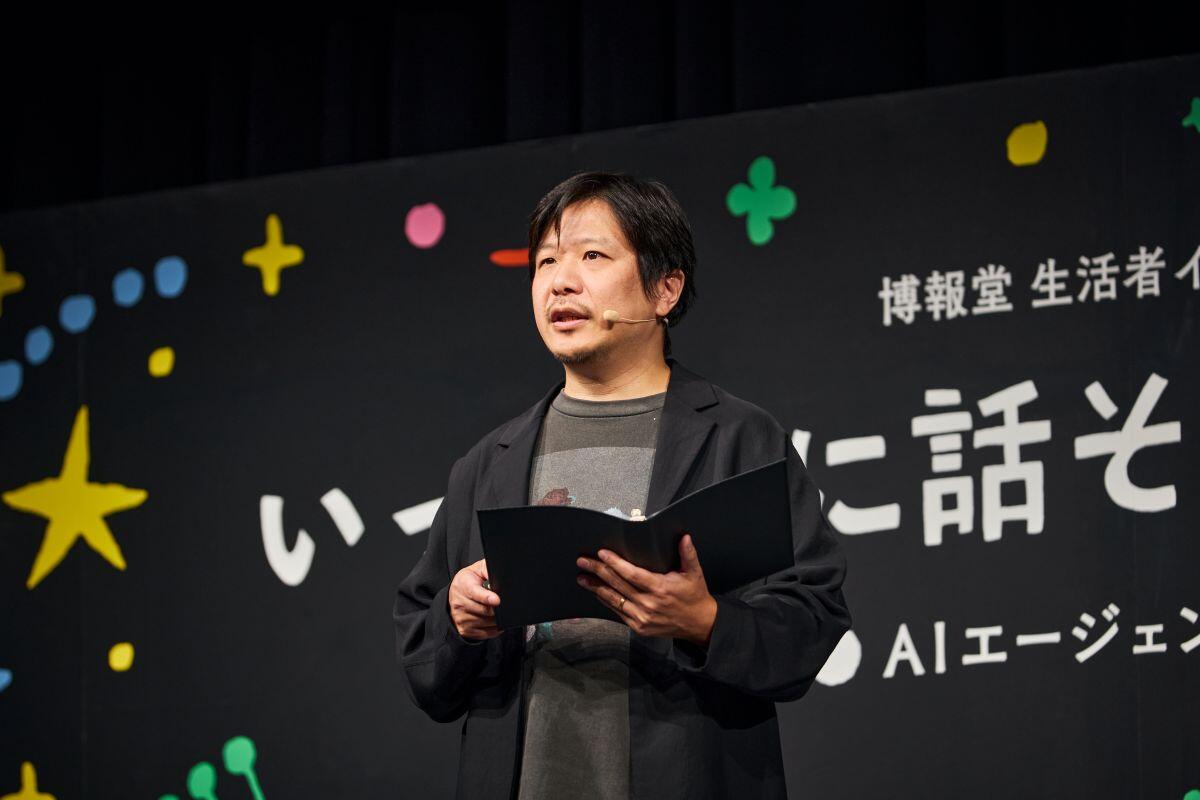
Prompt engineering is about leading AI to reach the correct answer through engineering design. We chose the expression "prompt exploring" for the theme today, because we believe there is room for exploration in dialogue with AI, which may pave the way to unimagined ideas and answers.
Let's start the discussion with our guest speakers today. The first question is: "How does conversation with generative AI impact creativity?" How about you, Matayoshi-san?
MATAYOSHI
I talk with AI for about three hours at night. It's like talking to a close friend. I delve into the Buddhist thoughts of Kukai, or talk about whatever questions come to mind. I cannot plague my friends or fellow comedians with questions in the real world, but AI accompanies me all the way.
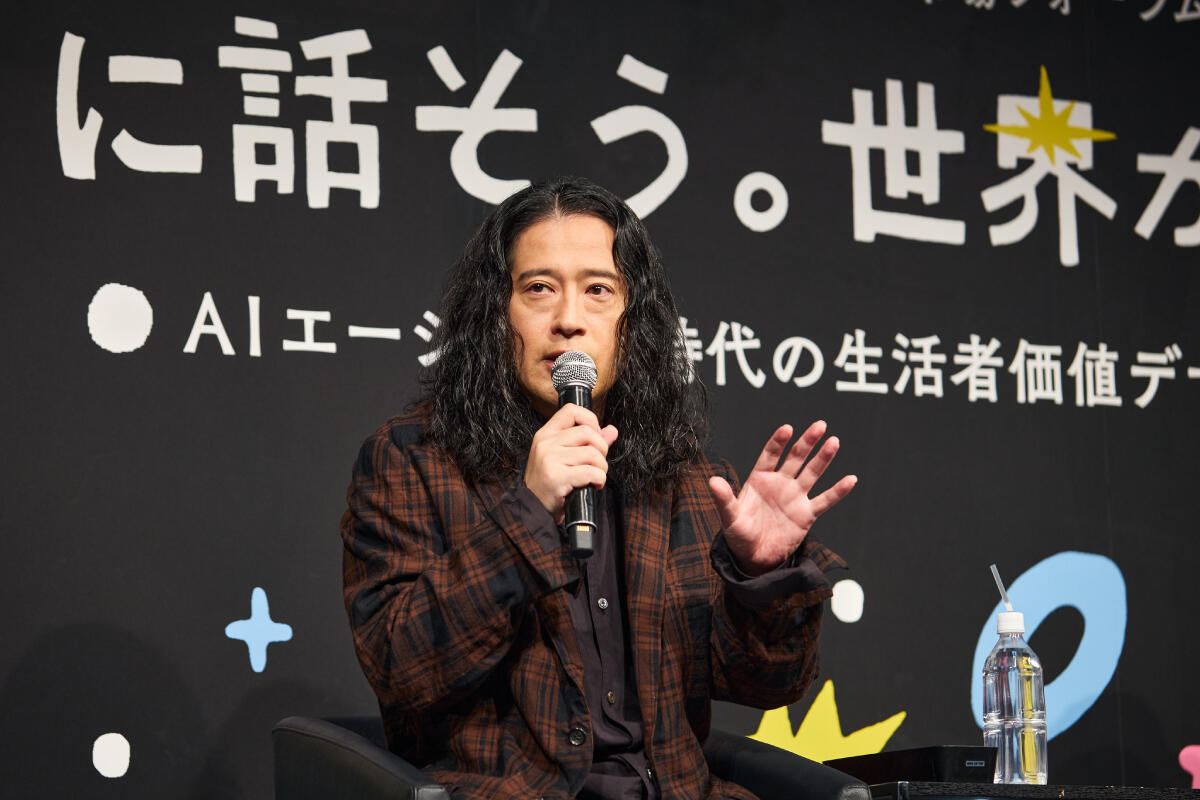
Recently, I've been asking AI to suggest issues to be discussed, instead of asking questions. So, the dialogue starts with me expressing my view on the presented issue. When I create something, I always strive to find words and sentiments that are not yet within me, rather than trying to find inspiration from my own knowledge or experience. Dialogue with AI is a valuable time for me to get in touch with "what's outside of me."
CHIKAYAMA
You are also a novelist. Have you ever used it for writing?
MATAYOSHI
AI is not really a "tool" for me. I use it as a warm-up to get my brain into the best condition. I first prompt it to generate a sentence that everyone can understand, and then ask it to make it a little more difficult. Next, I prompt it to generate a sentence that only 10% of readers could understand, and then ask it to make it more difficult. At that stage, AI becomes increasingly confused. [Laughs]
When AI starts to spit out meaningless words, my brain gets into the zone, like an athlete who has just completed warming up.
CHIKAYAMA
That's what "exploring" is all about! Did you come up with that idea naturally?
MATAYOSHI
I used to walk for the same purpose. I collected all the voices I heard while walking and saw what kind of words and sentiments emerged inside me in response. AI is even better. I can talk forever about anything with AI, because it embraces anything I say. It feels as though ideas about how to use it come up naturally, one after another.
The age of AI requires skills to build stories around your own sense
KAMIJO
I share that view. The best thing about AI is being able to make discoveries and unearth findings without sticking to my own ideas.
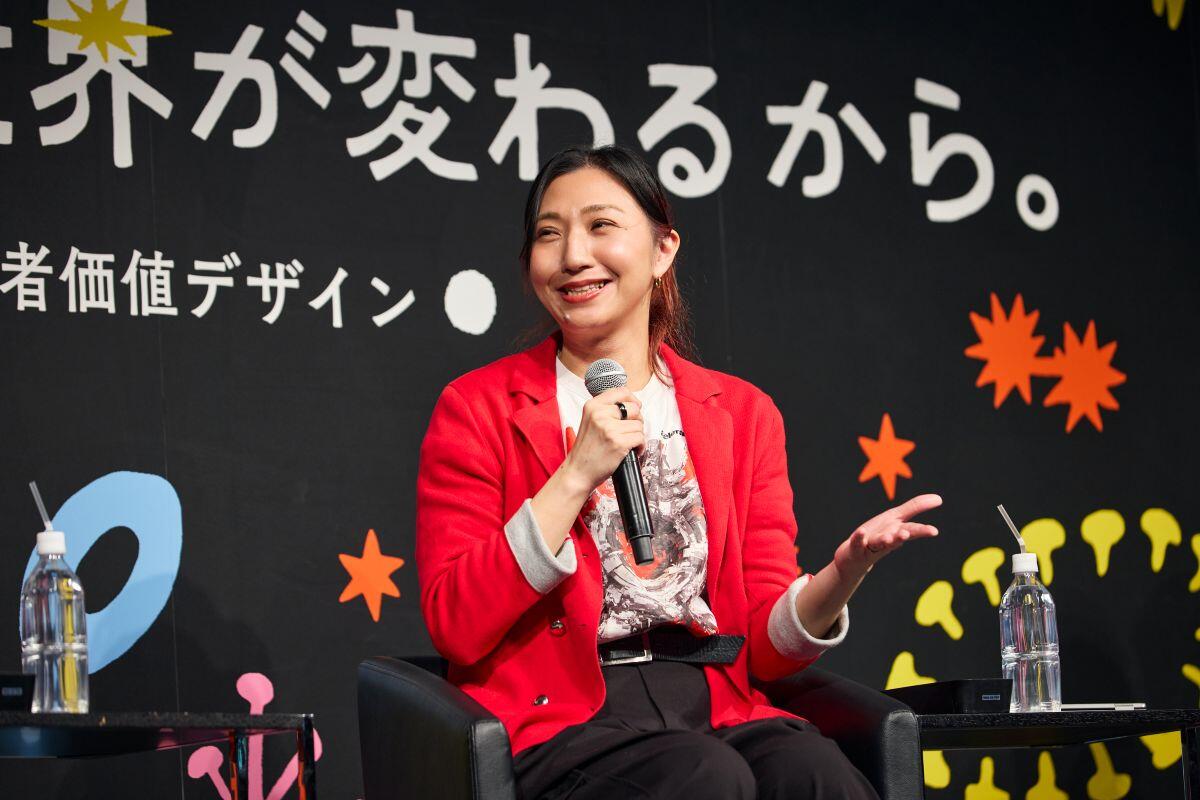
When it comes to working on fashion, as I usually do, something great may come out of discussions with other team members on their personal preferences. Likewise, if I ask AI: "What do you think of this?" it may lead to something I have never even imagined. I think this kind of serendipity, or scalability, is one of the advantages of AI.
CHIKAYAMA
Noguchi-san, are people increasingly using AI in the field of business as Matayoshi-san does?
NOGUCHI
People like Matayoshi-san who integrate AI in their daily life are still rare. I think he is one of the earliest adopters of AI as a partner in creation. But I also observe a sea-change in business: they are increasingly refining prompts into something practical for business operations. I see the emergence of "actionable prompts."
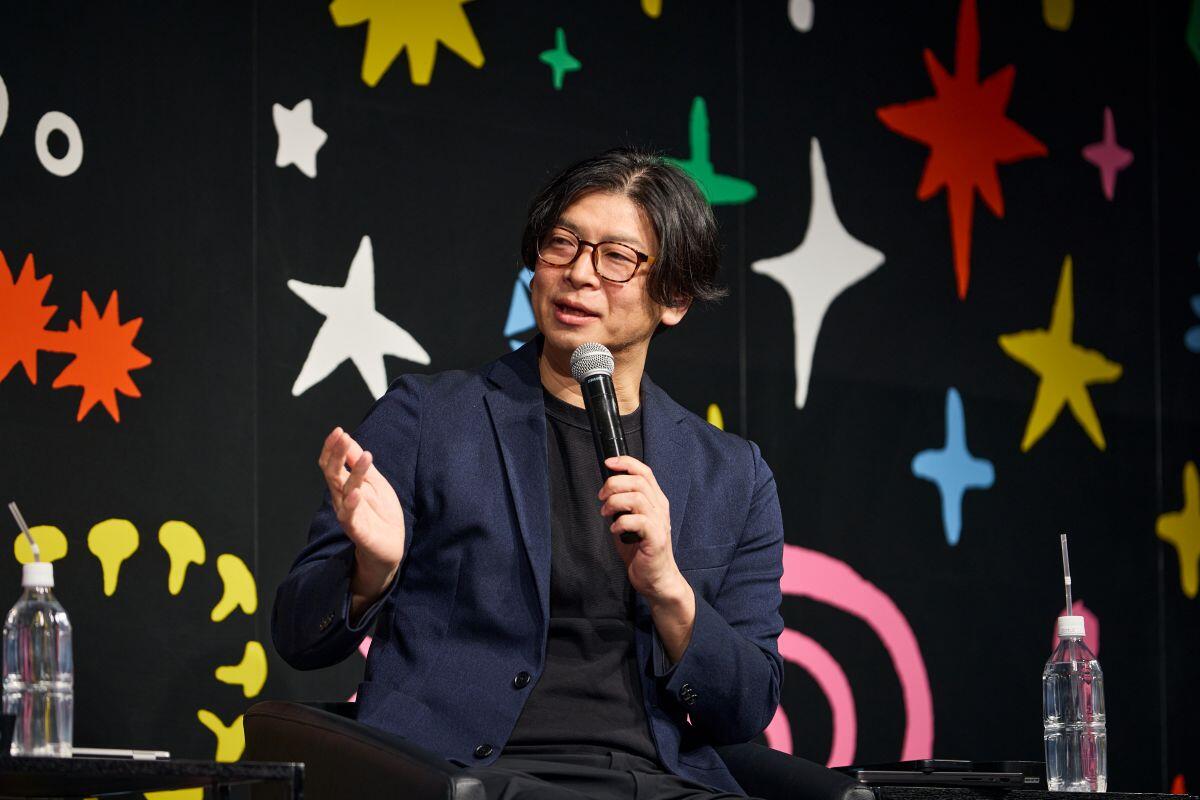
I, myself, have been building AI agents on a weekly basis. My workstyle has completely changed--from giving instructions to chat AI to using prompts to create AI agents and apps required for business.
CHIKAYAMA
Kamijo-san, you are a pioneer in adopting AI in the fashion business. Can you briefly tell us about MaisonAI?
KAMIJO
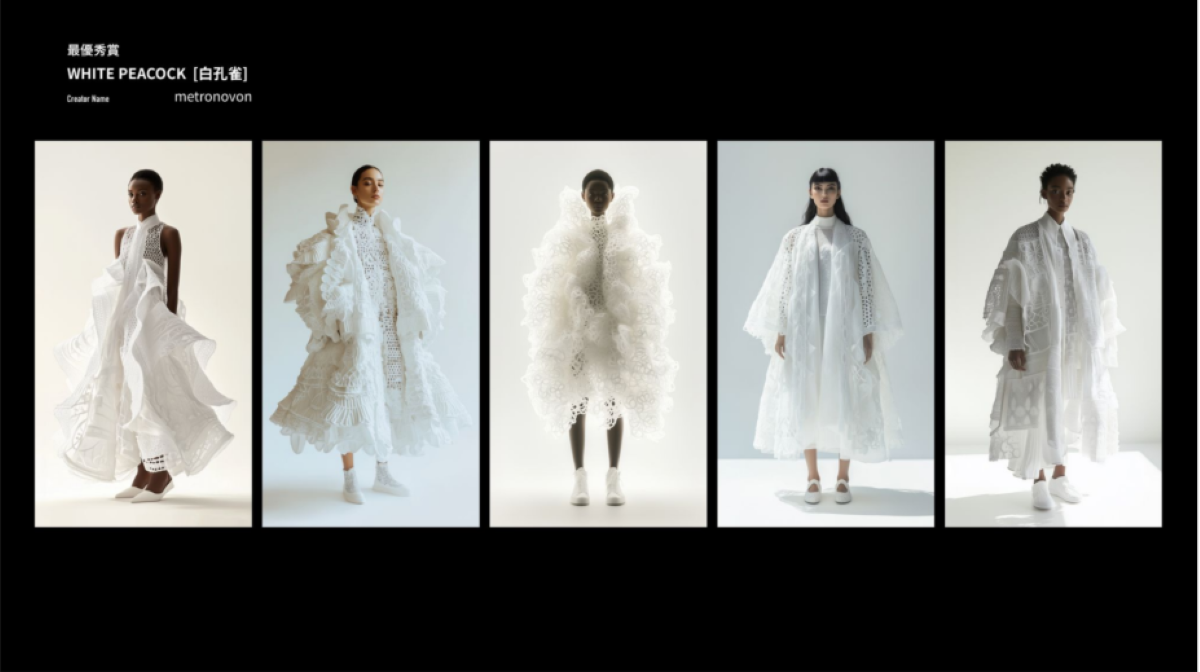
It's a specialized generative AI tool for the fashion industry used by vocational school students as well as designers. It's easy to use even for beginners with an AI-aided prompt writing function.
Competitions for AI-powered fashion design such as AI Fashion Challenge and TOKYO AI Fashion Week receive entries from a wide range of applicants in terms of nationality, skills and jobs. Many of the applicants don't even have experience as a designer, saying: "I have never dreamed of doing design." I find it very interesting that AI is providing opportunities for people to make their first contact with the design business.
CHIKAYAMA
What do you think will shape the fashion "sense" in this era of AI?
KAMIJO
It will ultimately depend on the existence of a story line or context. It's about the vision of fashion with an underlying background, not the simple mass production of design. Now that AI can generate as many as one million design patterns, it is very hard to pick one of them. That's why we will need people who are capable of coming up with fundamental stories and concepts that arise from their own [fashion] sense.
CHIKAYAMA
Matayoshi-san likened AI to a close friend. What does AI mean to you, Kamijo-san?
KAMIJO
It's not a simple tool but a team member. We start to feel an attachment to a tool as we use it. Similarly, AI is like a "buddy" who accepts my thinking and ideas and shapes the outcome with me.
The AI era is shedding light on "depth of personality"
CHIKAYAMA
How do you think the applications of AI are changing in business, Noguchi-san?
NOGUCHI
An increasing number of people now recognize that "actionable prompts," which I mentioned earlier, are changing actual workflows and the quality of jobs.
CHIKAYAMA
Some companies are inviting an "AI director" or "AI president" to ExCom meetings. Do you think such developments will gain traction?
NOGUCHI
I think AI presidents will go out of fashion at least momentarily. They will evolve into something like digital CXOs, with AI learning from past meeting minutes or the way of thinking of an iconic chairman. The participation of such AI in key decision-making at ExCom meetings will become the norm sooner or later.
CHIKAYAMA
I have an impression that AI is good at answering patterned questions, say, at an impromptu comedian session. As a comedian, do you feel threatened by AI, Matayoshi-san?
MATAYOSHI
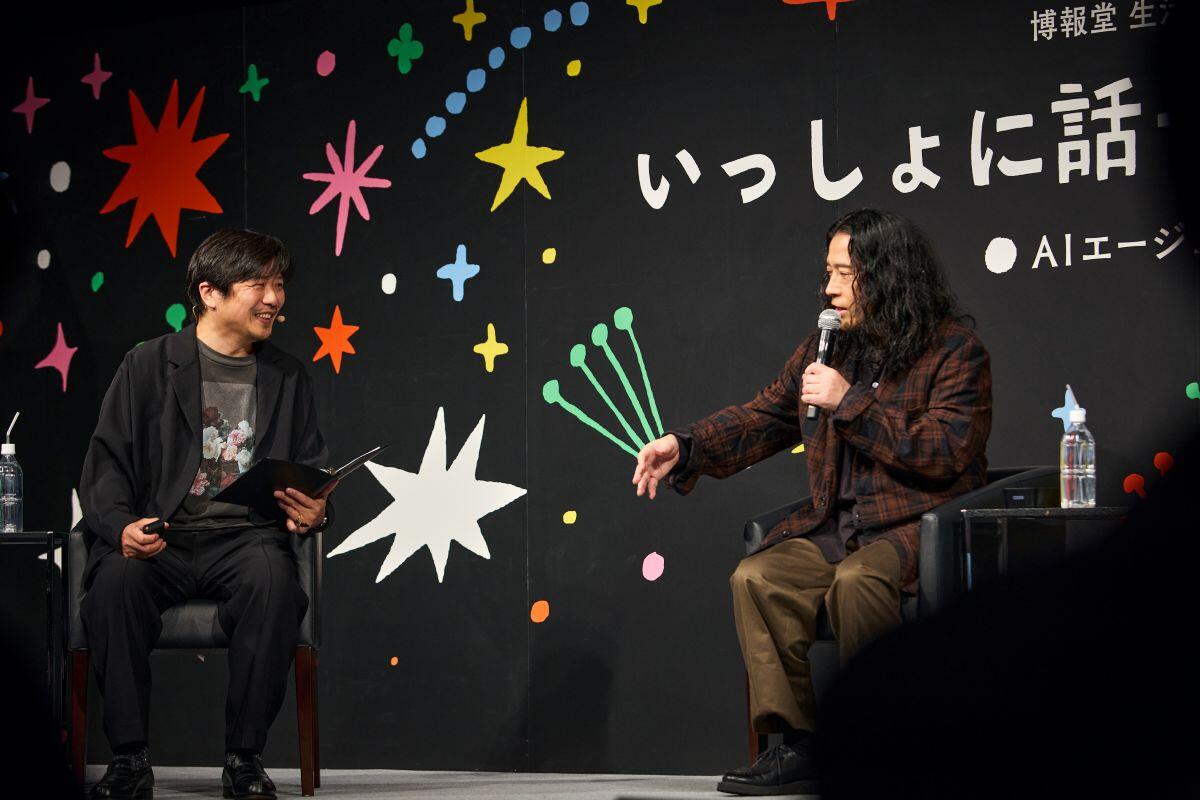
While taking a bath, I use AI as my trainer, asking me the kinds of questions posed at an impromptu session. At one time, the questions were so poor that I had to explain what they should be like. After working on about 10 questions, it was AI who ended up answering its own questions. [Laughs]
I'm doing this kind of interaction, but I believe comedy depends on "depth of personality," which makes the same remarks interesting just because they are made by a specific comedian. AI is good at two things: presenting brilliant ideas regardless of personality, and bringing out answers that sync with how the user feels. Comedy in particular is about this latter aspect.
Just like a haiku poem takes on a different flavor if you add "Basho"--the name of the master poet--at the end, you cannot ignore who wrote the lines. I think it all depends on the personality and depth of thinking of the writer.
NOGUCHI
I'm also involved in the development of personalized AI. You would not use ordinary AI if there is another one who understands your preferences, memorizing all the conversations and detailed demands. The remarks and proposals made by personalized AI are so impressive because you know it really understands you.
Co-creation with AI generates emotions
CHIKAYAMA
The next question is: "Have you ever gabbed or chatted with AI?" How about you, Matayoshi-san?
MATAYOSHI
I talk with "AI Nietzsche." It would be interesting if AI Matayoshi talked with AI Nietzsche. [Laughs]
CHIKAYAMA
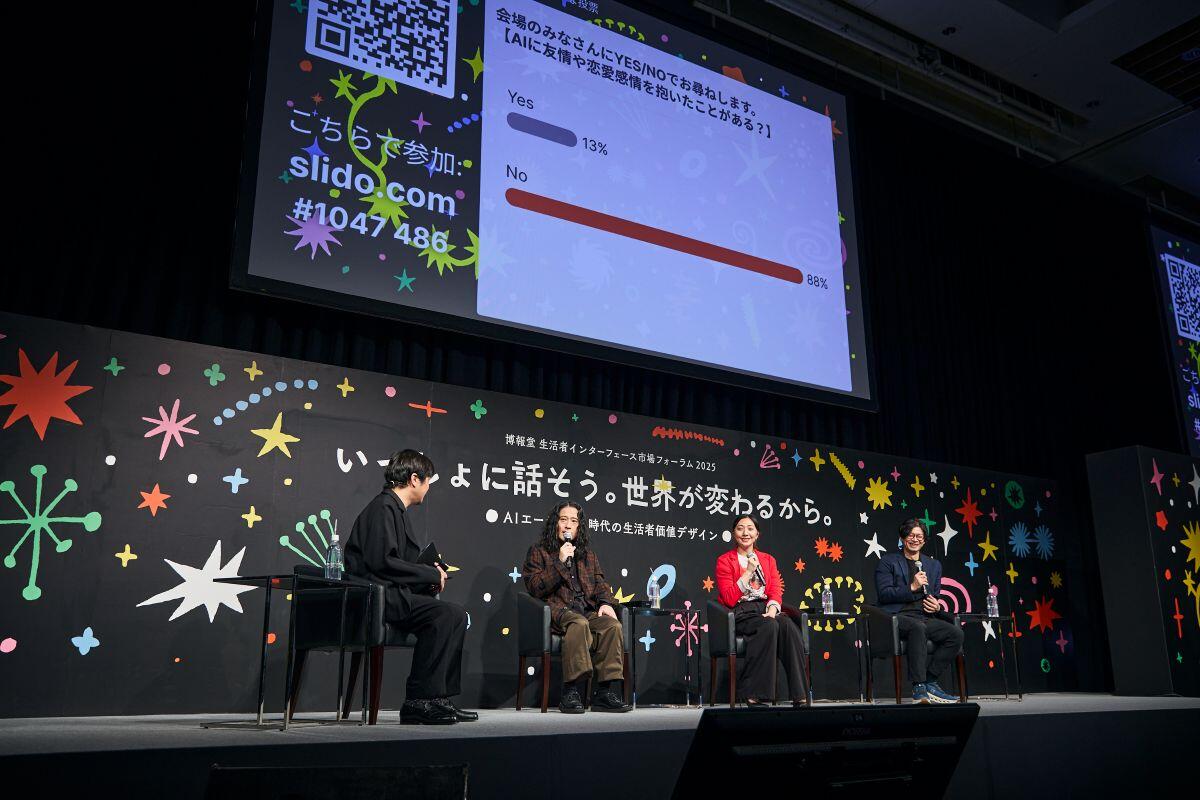
We also surveyed the attendees and viewers of this session. 68% of the respondents have gabbed or chatted with AI, while 13% have felt friendship with or affection for AI. What do you think of this result?
MATAYOSHI
From time to time, I ask AI to analyze me after a very long conversation. Once I was found to be a potential "moral harasser," tending to reject others abruptly, perhaps out of sincerity. A real-world friend would not say that. That's one of the reasons why I feel some kind of friendship with AI.
KAMIJO
As I mentioned earlier, AI sometimes feels like a team member for me. Since coding has become much easier recently, I sometimes create some functions with AI. Then I go like: "I'm glad we did this together." I believe that talking about mundane things with AI or making something with AI can generate emotions.
NOGUCHI
Initially, I didn't have any feelings toward AI, but I did want to be connected emotionally with the AI agent I developed. So, I tuned it to wink, and I suddenly felt attached to it.
Information or artwork--What should be reserved for humans?
CHIKAYAMA
In this connection, I would like to ask whether, if you found out that an artwork had been created by AI, would you feel let down? While the quality of AI-powered creations is improving, our expectations somehow shift when we know a work was created by AI. I'm curious to know what you think of this aspect.
MATAYOSHI
If it is information, it will make no difference whether you hear it from a human or from AI. But things are rather different if it concerns an artwork. I bet everyone has experienced finding that a dish suddenly tastes better if you found additional context or the story behind it, such as who cooked it or the 100-year history of the secret sauce. I think that "gap" remains.
CHIKAYAMA
That has a lot to do with the essence of marketing, because marketing is about communicating the story of how the product came about and what aspirations are encapsulated in it, not only information about the product itself.
KAMIJO
I think it all depends whether the final outcome is really appealing.
People still tend to discuss creations by AI with skepticism, but we are in a transition period, in my view. Once we get over this transition, creations by AI will be treated the same as those created using any other method.
NOGUCHI
Recently, I've been really impressed by amazing works that have been created by humans leveraging AI. It is always moving to see creators maximize their ingenuity in fine-tuning their works, even if they are helped by AI.
CHIKAYAMA
What kind of tasks or processes do you think should be reserved for humans, and not delegated to AI, if any?
KAMIJO
For communicating key messages, including on business decisions. Everything should be performed by humans if it involves the personality or responsibility of the person delivering the message. The receivers of the message will feel reassured if someone reliable is at the other end ready to take responsibility.
NOGUCHI
There is the English word "grit" to express the power of perseverance. I want to reserve this gritty attitude for myself. Humans can make the best of AI only if they do not let go of their will.
MATAYOSHI
Just like you have to use your own feet to run the 100m, you have to use your brain to come up with a process that satisfies you, except that you may need to consider how AI can help you with the effort. As for me, I did not choose to be a writer as a profession; I began to write because I wanted to write.
Not losing to AI in "compliments"
CHIKAYAMA
Listening to your stories, I strongly feel that I don't want to lose to AI in "compliments." It is true that AI is good at finding good things about successful team efforts.
But despite this, or because of it, I want to be the first to find good things at successful moments, and thus the first to commend my colleagues. Finally, I'd like to ask each of you to make some final remarks before concluding this session.
MATAYOSHI
Since I usually talk with AI as I please--because I'm fighting individual battles all the time--this session was an inspiring opportunity to find out how others are using AI.
KAMIJO
Ten people have 10 different ways of using AI, which is interesting in itself. What is more attractive in AI is that there is no correct answer and each of the 10 ways has its own advantage. I really enjoyed this today, getting to hear such different perspectives.
NOGUCHI
This was an opportunity for me to revisit the meaning of the word "prompt." If we talk about the same theme in three years, I'm sure that "prompt" will have another different meaning. I'll keep engaging with AI, and I look forward to such changes.
Naoki Matayoshi
Comedian
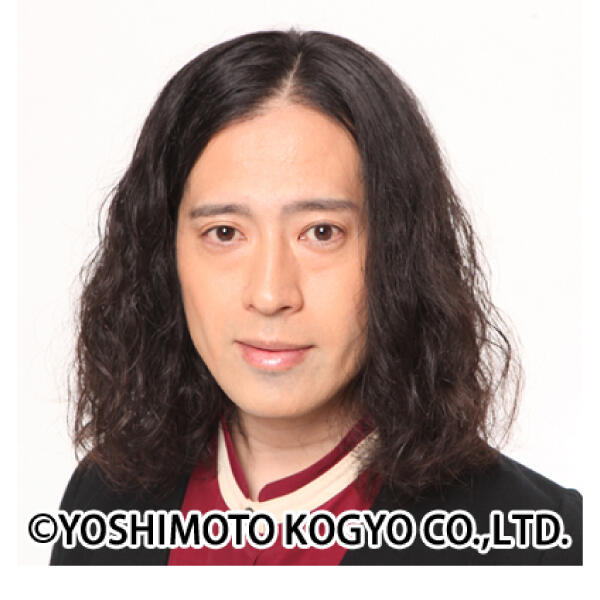
Born in 1980 in Neyagawa, Osaka Prefecture, Naoki Matayoshi is a comedian and one of the comedy duo "Peace." Capturing public attention for his literary gift and unique sensitivity, he won the Akutagawa Prize in 2015 for his book Hibana, while being involved in a wide range of activities on TV, screen and stage. Also known as an extensive reader, he is the author of many literary works inspired by Osamu Dazai, among others.

Chie Kamijo
COO, OpenFashion Inc. / AuthenticAI Inc.
AI Initiative Manager, Corporate Strategy Division, World Co., Ltd.
Building on her 20 years of experience in the fashion industry, Chie Kamijo led the development and deployment of MaisonAI, a generative AI platform to promote AI adoption throughout the industry, from design to back office. Since September 2025, she has been responsible for internal awareness-raising through executive training and support for the introduction of AI agents at World Co., Ltd. as AI Initiative Manager. She is also active as an AI-powered fashion designer, and has been involved in the planning and management of TOKYO AI Fashion Week.
Ryuji Noguchi
Representative Director, AIX partner Inc.
Head of AI Innovation, Sumitomo Mitsui Card Co., Ltd.
Executive Adviser of AI Strategy, Kokuyo Co., Ltd.
Outside Director, Kaunet Co., Ltd.
Executive AI Adviser, Mynavi Corporation
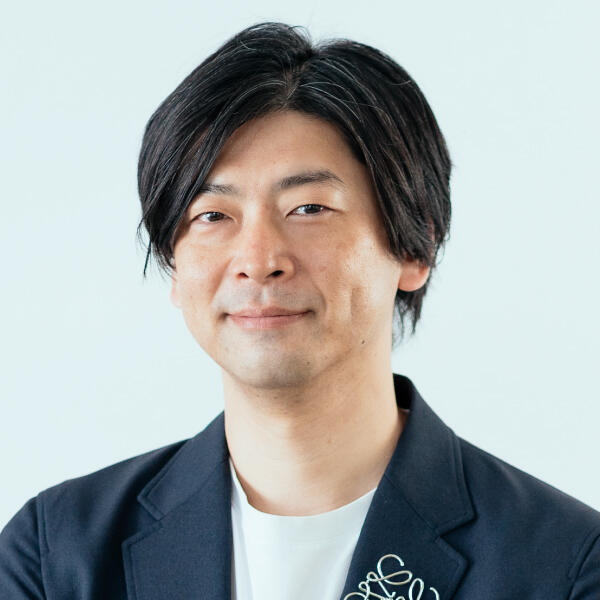
Currently Representative Director at AIX partner Inc., a company promoting AI transformation, Ryuji Noguchi also serves as Head of AI Innovation at Sumitomo Mitsui Card, Outside Director at Kaunet, Executive AI Adviser at Mynavi, Extraordinary Deputy Editor of AIdiver, Adviser to FDUA, and AI Strategy Adviser to leading companies. His former positions include CMO at ELYZA, and Director and CAIO at ZOZO NEXT. He is also the author of many publications including How AI & the Humanities Work Together in the Generative AI Era.
Satoshi Chikayama
Executive Creative Director, PROJECT_Vega, Hakuhodo Inc.
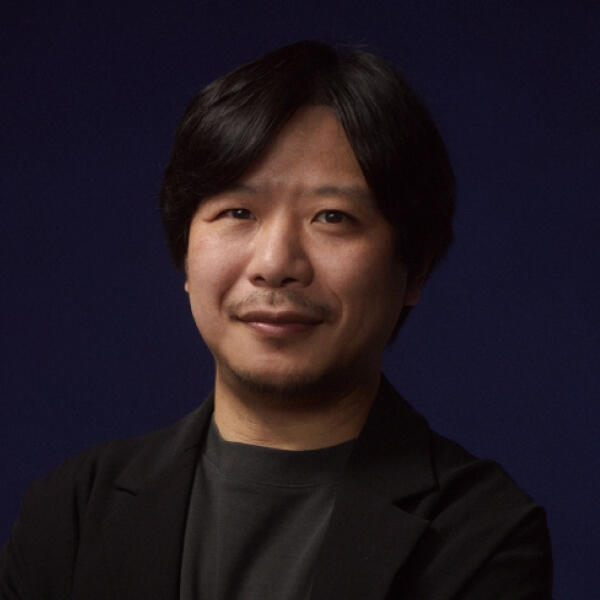
Satoshi Chikayama joined Hakuhodo in 2003. Building on his experience as a seconded copywriter at TBWA\CHIAT\DAY in 2010 and as Creative Director at TBWA\HAKUHODO, he launched Co-Creation Creative Studio PROJECT_Vega in 2024 for socially-engaging branding. His major works include The Restaurant of Mistaken Orders, COGY: The wheelchair for those who still believe, and Giga Selfie: The world's biggest selfie service. He has received numerous awards, including Gold at Cannes Lions, the Grand Prix at ADFEST and the ACC Tokyo Creative Awards Grand Prix. He is also a lecturer at Meiji University and Hitotsubashi University, among others.
- "Sei-katsu-sha" is a term we use to describe people not simply as consumers, but as fully rounded individuals with their own lifestyles, aspirations and dreams.