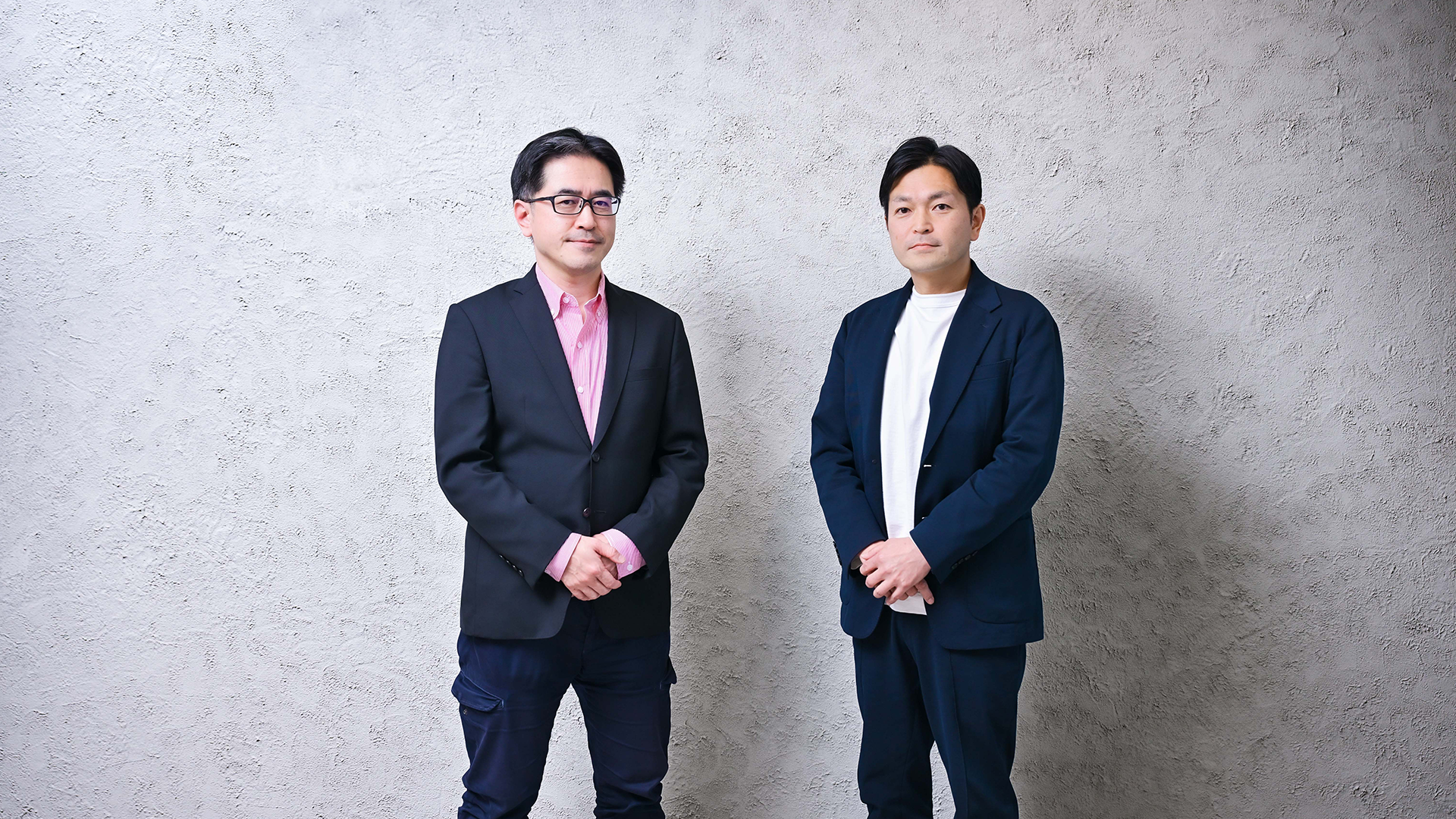
This is Volume 5 of Human-Centered AI Partners, a series of conversations with key persons of the Hakuhodo DY Group on artificial intelligence hosted by Masaya Mori, who leads the Human-Centered AI Institute (HCAI), the Group's center of excellence on AI research. In this article, he talks with Yuzo Tanaka, Representative Director & Chairman of Hakuhodo DY ONE Inc. about the company's key efforts going forward and the future of AI-driven value provision.
Yuzo Tanaka
Representative Director & Chairman, Hakuhodo DY ONE Inc.
Masaya Mori
Head of Human-Centered AI Institute
Corporate Officer/CAIO, Hakuhodo DY Holdings Inc.
Growth strategy to deliver as a "digital core"
MORI
Combining the knowledge and resources developed by D.A.Consortium (DAC) and IREP, Hakuhodo DY ONE is now positioned as the "digital core" of the Hakuhodo DY Group. At the beginning of a new business year, what kind of growth strategy do you have in mind?
TANAKA
Since Hakuhodo DY ONE is a digital marketing company, it is only natural that our business primarily focuses on advertising. Despite the importance that we attach to the advertising domain, however, we must provide support in various other domains as a partner to help clients grow their business. Moreover, the definition of the term "digital" has been widening, which points to the importance of creating a system to fully support the business of clients, stepping beyond the framework of advertising.
MORI
That attests to the key importance of the "full funnel" concept, an end-to-end, holistic perspective of marketing activities, doesn't it?
TANAKA
That's right. We have to ensure that advertising and technology work in tandem. Indeed, our overarching theme for this year is to launch business in the domain of marketing solutions in addition to the advertising business.
Another major challenge is how to maintain the current performance with a smaller headcount. That means growing revenues and entering new domains while maintaining the current workforce. It also means reassigning people currently in charge of advertising operations to other areas, including technology and marketing solutions. If we can meet this challenge, we will be able to build a more comprehensive client support structure.
The adoption of AI--today's topic--will also be an entry point. The recent transition from generative AI to AI agents will require a better combination of human resources and AI.
Focusing on developing digital talents to nurture partners that support clients' business growth
MORI
AI-powered value creation could be a decisive factor. Please explain your business priorities and objectives in widening your scope of operation beyond the existing advertising business.
TANAKA
This fiscal year, we aim to increase non-advertising revenues by consolidating the various business areas including advertising operations, advertising management and media buying and expanding our scope of business to include marketing solutions. Taking social media marketing as an example, we are not limiting ourselves to advertising on social media, but seeking to expand our business around providing the business process outsourcing services required for social media management, as well as solutions such as DialogOne®, designed for AI-powered automated messaging on LINE.
Provision of high-touch, "accompanying" support for clients' e-commerce operations is another priority. Faced with increasingly complex technologies, many companies are struggling to operate e-commerce stores on Amazon and Rakuten, and to handle the work of being a store manager. We need to capture the needs of clients for operating e-commerce on their own and offer accompanying consulting to meet those needs.
Importantly, creative is linked to all of these objectives. Creative is crucial for everything we do, ranging from product photography and explanation to maximize the attractiveness of the product, to sales promotion programs including video production and social media management. It is also necessary to adopt AI in those processes to reduce man-hours.
MORI
The scope of advertising and marketing has substantially widened, which made me realize the importance of keeping pace by expanding our own scope of business. Now that we are required to operate as a service, rather than simply selling goods, it is essential to be ready to perform every kind of task including customer relationship management (CRM), social media management, management of e-commerce sites and support for store operation.

TANAKA
I agree. In the area of digital transformation (DX) related to advertising, rather than simply selling our tools, knowledge and operational skills regarding the tools that are frequently used in marketing are required. Prompt engineering skills will also be crucial if we are to make use of AI. Digital talents are the key to this shift.
We are already focusing on human resource training, as former DAC and IREP were both accustomed to mass hiring for advertising operations. We also launched a Data Juku for the purpose of learning structured query language (SQL), benefiting some 100-200 employees a year. Promising employees also receive an additional six months of on-the-job training so that they may practice SQL at work.
The ability to analyze data with SQL allows you to find and implement better ways of doing things rather than repeating the same thing. This in turn enables personnel working on CRM to leverage data, enabling them to work as partners in support of clients' business growth. Recently, we have also made available a prompt training course, and over 800 employees have already attended it.
MORI
Over 800 receiving prompt training is amazing. Many talents developing their AI skills for improving work efficiency and productivity is a sign of heightened interest in AI across the whole company.
TANAKA
As the advertising industry is now required to shift from conventional "margin business" to a fee model, our reputation in the market will improve if internally trained talents improve their skills and expand their capabilities. We remain focused on expanding the residential model of business, dispatching to clients our versatile talents skilled in multiple disciplines including CRM, customer data platforms and data use.
Introducing Dify to give momentum to AI adoption in-house
MORI
Although we often talk about topics such as the development of AI and digital talents and the improvement of digital skills, the conversation tends to be limited to questions such as which AI tools can be used or what kind of digital service is available. More importantly, however, we need to think about how to optimize various business operations and how to develop a structure to accommodate the change, in addition to simply expanding the scope of business. In terms of human resource development, organization-wide upskilling to hone practical skills is important, rather than simply learning how to utilize the tools.
TANAKA
In adopting AI, it is crucial to think in terms of how to monetize with AI, rather than focusing solely on improving operational efficiency. Without talents capable of making use of AI, it is impossible even to make a start. Hakuhodo DY ONE has developed a secure cloud environment called HAKUNEO ONE to enable employees to utilize generative AI securely. Unique users have exceeded 2,900, out of the total workforce of some 3,000.
MORI
An increasing number of major companies have developed company-wide generative AI infrastructure, but only a small percentage of employees are regular AI users. Reportedly, about 10-15% of employees actually use AI at work even among financial service companies, which are leaders in AI adoption.
TANAKA
AI adoption in our company clearly increased with the introduction of Dify, a no-code tool. We thus built an enabling environment for employees to develop AI-powered applications with Dify using completely open files while avoiding the risk of information leakage and protecting confidential information. As a result, we now have some 230 "Dify creators."
For operational management purposes, each week we rank the tools thus developed, which helps motivate the creators of highly ranked tools. One of the top-ranked tools is Zero-Order Analysis, which reads data on URLs, targets and competitors to obtain information on the products of clients and automatically perform persona analysis, thus helping to plan effective advertising strategies.
As these examples suggest, our non-engineers in charge of advertising operations are now developing apps one after another, building company-wide momentum, and they are increasingly familiar with writing prompts. The introduction of Dify turned out to be highly effective in accelerating the internal use of AI.
MORI
In that sense, acquiring AI skills effectively paves the way for venturing into unfamiliar fields. Going forward, we will need talents who can proactively utilize AI to systematize their own work, in addition to executing routine jobs.
TANAKA
I couldn't agree with you more. Ideally, everyone should be able to handle prompts, although that is not feasible. Yet, Dify was definitely a good start in that direction.
I think AI agents are very useful for employees to get acquainted with AI, but there are a number of issues that require people to find a solution. In this respect, we will need to develop a frontline, service line and solution line with a deep understanding of AI.
Corporate competitiveness to diverge after the adoption of AI
MORI
What kind of mindset do you think is crucial for working in the AI era?
TANAKA
We used to be limited to two job categories: advertising account service and advertising operations. Now we have introduced initiatives to widen career choices for those who have acquired new skills, including SQL and prompt engineering.
If you want to upgrade your career, you can first learn relevant skills for subsequent reassignment. I believe this has changed the mindset of employees; they can now get themselves ready for a different unit without thinking about changing companies.
MORI
So, you are creating a culture to enable employees to meet new challenges in-house by honing their skills using AI and digital tools, instead of stepping outside the company for something better, thinking: "I do this kind of work so that's what I am." In so doing, individuals can broaden their career paths while the company can significantly improve its potential, too.
TANAKA
Demand for AI consulting and the resident model will dwindle once general companies gain standard skills for using AI. How long do you think it will take for companies to develop AI talents on their own, effectively boosting the penetration of AI?
MORI
Adopting AI in the present business and operation will be completed in two to three years, I think. That's because the improved versatility of AI has led people to think that AI is capable of producing output from whatever input. The advent of AI agents will broaden its applications still further.
But when something is taken for granted, people will want to do different things. If the client wants to do something extraordinary with AI, we will have to step outside the existing business framework.
That means we will have to take the initiative in venturing into something new and reshaping the existing business. I think corporate competitiveness will diverge once AI has fully penetrated the market.
TANAKA
I led the technology business of DAC to support clients' marketing activities by utilizing data. Now it's about how to utilize AI. But data-savvy talents will not be helpful unless they have a knowledge of marketing.
Actually, having numerous AI talents well-versed in marketing is one of our strengths. To differentiate ourselves, we will also have to address the question of how to build trust as a partner capable of AI-powered marketing based on sei-katsu-sha* insight.
Aiming for AI agents to serve as an effective bridge between sei-katsu-sha and clients
MORI
People generally speak of value creation with AI only in terms of advancing efficiency and automation through the evolution of technologies such as Dify and RAG. In this context, AI agents presented by Hakuhodo DY ONE go beyond the frameworks of simple efficiency and automation to serve as an effective bridge between sei-katsu-sha and companies.
As can be observed in leading cases such as AI Powered Tokyo Dome City Newspaper and DDDAI, our approach to the adoption of AI agents for companies to deepen their understanding of sei-katsu-sha, and for sei-katsu-sha to deepen their understanding of companies and brands, is one of our unique strengths.
TANAKA
Marketing activities are indispensable in everything we do, ranging from lead generation and the use of data accumulated in CRM to digital advertising operations. In this connection, we strongly hope the Human-Centered AI Institute will proactively communicate our value proposition shaped by the unique strengths and know-how that we have developed over the years and our stock of marketing-savvy AI talents.
MORI
Many companies today are trying hard to catch up with the rapid evolution of AI. The successive emergence of new technologies almost makes us believe that this is a no-win situation for everyone. And that is why we have to define what our strength will be in these circumstances.
In the field of healthcare, for example, AI is used for diagnostic imaging, thus improving the accuracy and quality of diagnosis. That is made possible by the evolution of medical equipment capable of high-resolution imaging including MRI and CT. However smart AI may be, it is impossible to diagnose correctly with poor imagery. The question is not about AI per se, but about its combination with our own strengths.
TANAKA
I think we cannot go the distance with a team solely made up of prompt engineers, because they may fall into a collective "brain freeze" situation. That's where an AI application specialized in marketing comes into play. We will need to make our presence felt so that Hakuhodo DY ONE is at the top of the minds of clients and customers when it comes to adopting AI. Now that we have our center of excellence at HCAI, I hope we can engage in useful discussions across the Hakuhodo DY Group to find new business potential with the help of AI.
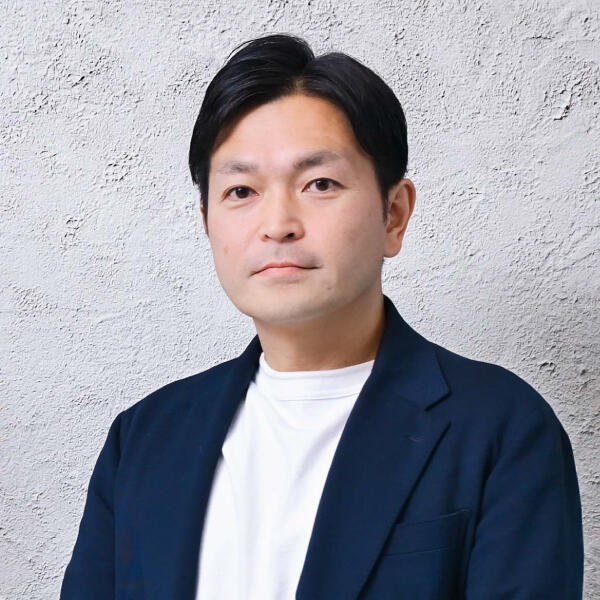
Yuzo Tanaka
Representative Director & Chairman, Hakuhodo DY ONE Inc.
After joining Digital Advertising Consortium Inc. (now Hakuhodo DY ONE Inc.) in 2002, Yuzo Tanaka successively led the account service and development units.After serving as Director and Executive Director & Executive Officer, he was appointed as Representative Director & President in 2022 before assuming the current position in April 2024. He has wide experience in digital marketing support both inside and outside Japan including in digital advertising operations, solution development driven by data technology and AI, and human resource development.
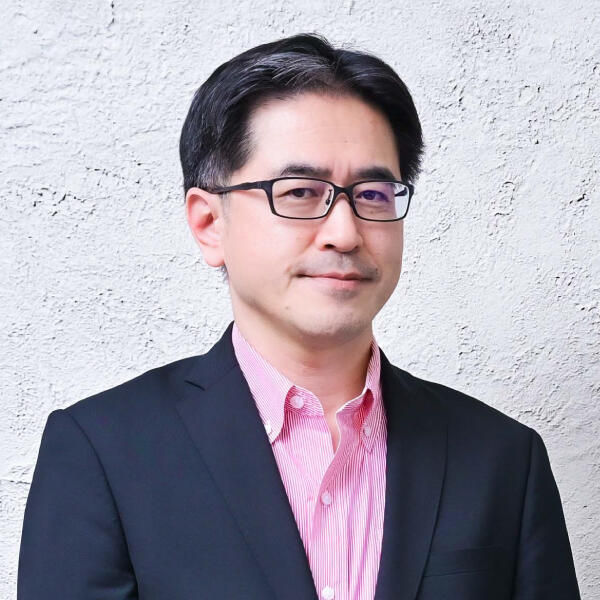
Masaya Mori
Head of Human-Centered AI Institute
Corporate Officer/CAIO, Hakuhodo DY Holdings
After working at a global consulting firm and an internet company, Masaya Mori joined a global professional firm where he engaged in digital transformation and supporting companies and industries using AI and advanced technologies. His other positions include: Adjunct Professor at Tohoku University; Advisor to UTokyo IPC; and Advisor to Japan Deep Learning Association. He is the author or translator of numerous publications, including The Great Web Change: The Beginning of a Power Shift (Kindai-Sales. Co., Ltd.), the Japanese translation of The State of AI in the Enterprise, 5th Edition (Co-translator, Deloitte Tohmatsu), and the Japanese translation of Trustworthy AI: A Business Guide for Navigating Trust and Ethics in AI (Supervising translator, Kyoritsu Shuppan).
- "Sei-katsu-sha" is a term we use to describe people not simply as consumers, but as fully rounded individuals with their own lifestyles, aspirations and dreams.